Thinking about listing your Heritage Oaks waterfront home? Your dock and seawall can make or break buyer confidence, insurance approvals, and closing timelines. You want a smooth sale and top dollar, not last‑minute repairs or disclosure issues. In this guide, you’ll learn exactly what to inspect, which permits to verify, what to disclose, and how to budget and plan before you hit the market. Let’s dive in.
Why checks matter in Heritage Oaks
Heritage Oaks sits along the Loxahatchee River, an environmentally sensitive corridor with added protections. That means shoreline work often faces extra scrutiny and specific design rules, especially near seagrass and mangroves. Florida also expanded mandatory flood disclosures, so you must provide the state’s flood‑disclosure form and disclose known flooding during your ownership under Florida Statute 689.302.
Buyers and lenders in 33469 are watching flood risk and insurance costs closely. Recent coverage shows premiums rising across many Florida ZIP codes, including the Tequesta area, which puts a spotlight on structural condition and elevation documentation. See the local context in this WLRN analysis of rising flood insurance costs.
What to verify before listing
Permits and authorities to contact
- Village of Tequesta Building Department: Ask for permit history for docks, lifts, and seawalls and review submittal checklists.
- Palm Beach County Planning, Zoning & Building: Run a county open‑permit or lien search to catch unresolved permits or code issues. Start with the county permit and lien search page.
- Florida Department of Environmental Protection: The Loxahatchee River is part of an aquatic preserve, which affects how repairs and replacements are reviewed.
- U.S. Army Corps of Engineers, Jacksonville District: Many minor projects fall under programmatic general permits; others need deeper review.
Rules to keep in mind
- Seawall preferences: Florida law and guidance often favor riprap or living‑shoreline approaches when repairing or replacing existing vertical seawalls. Review the framework in Chapter 373 of the Florida Statutes.
- Dock size and lift limits: Regional and programmatic permits cap dock square footage and slips for single‑family homes, and they add protections in areas with seagrass. Start with the State Programmatic General Permit for common thresholds and conditions.
What to inspect and document
Seawall checklist
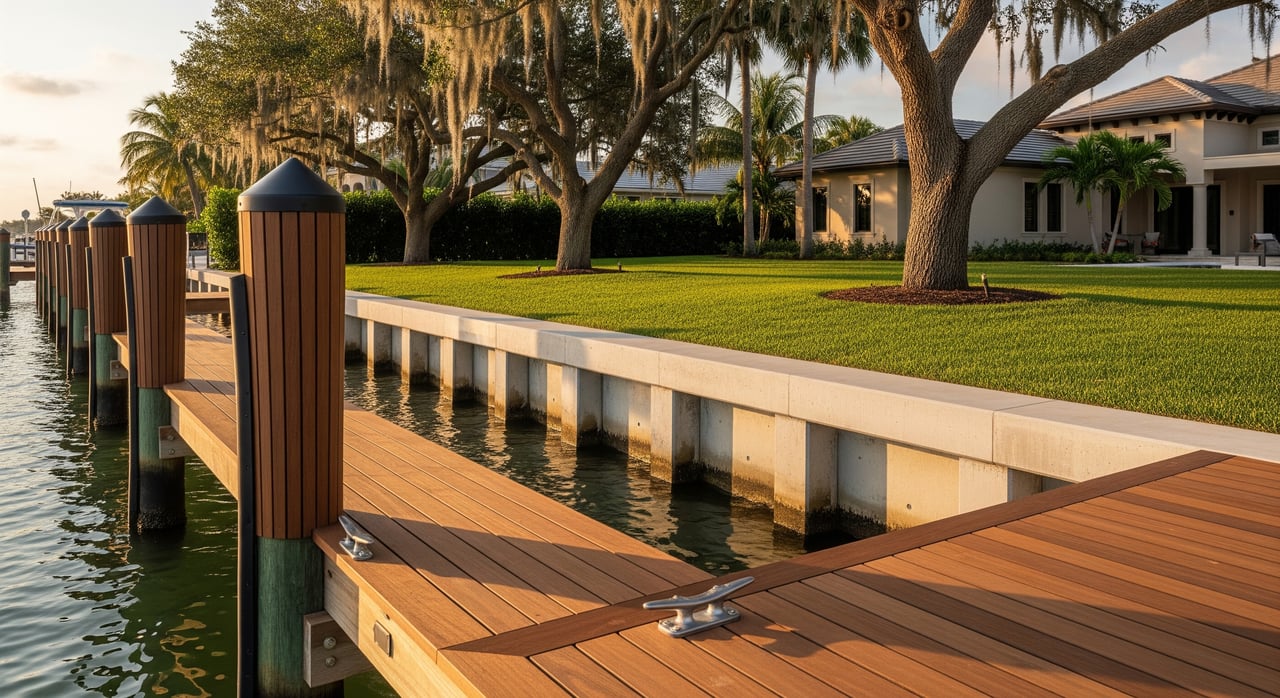
- Alignment and surface: Look for leaning, cracks, spalling, cap separation, and low or ponding soil behind the wall. These can signal progressive failure.
- Toe and underwater conditions: Have a marine contractor or engineer check for toe scour, undercutting, voids, and exposed tie‑backs.
- Materials and service life: Note whether the wall is concrete panel, steel, vinyl, or timber. Remaining life and repair options vary by material.
- Permit history: Confirm whether anchors, tie‑backs, and toe stone were installed and properly permitted. Missing permits can delay future work.
- Experts to bring in: Use a licensed marine contractor, and a coastal or structural engineer if replacement is likely. For context on nature‑based options, see this UF/IFAS overview of living shorelines.
Dock and boatlift checklist
- Structure: Inspect pilings for rot or spalling, connections, hardware, and deck boards. Damage often hides at the waterline.
- Mechanics and electrical: Check lift motors, cables or straps, and shore power with GFCI/RCD protection. A marine electrician can verify code compliance.
- Footprint vs. permits: Measure dock area and compare it to your authorizations. Single‑family docks face size and slip limits. See USACE guidance in RGP SAJ‑82.
Environmental red flags
- Seagrass and SAV: Work in or near seagrass can trigger surveys, design changes, and mitigation under USACE and FDEP criteria.
- Mangroves and shoreline vegetation: Trimming and removal are tightly regulated and often need permits.
Safety and utilities
- Shore power: Confirm safe conduit routing, proper breakers, and GFCI protection. Insurers often require corrections if it is non‑compliant.
- Fuel and hydraulics: Verify secure, labeled lines with no leaks.
- Navigation: Confirm your setup does not encroach into channels or violate bridge or clearance constraints.
Documents to gather
- All permits and final inspections for original installations and repairs.
- Any recent contractor or engineer reports on condition and remaining life.
- An elevation certificate and a current flood‑zone map excerpt if available. Many buyers and insurers will ask for these.
Costs, timing, and market impacts
What to budget
- Seawall work varies widely by material, access, and damage. Consumer guides estimate many repairs in the tens of thousands, with per‑foot ranges often around 100 to 600 dollars or more. Review ballparks in this Angi seawall cost summary, then get 2 to 3 local bids for accuracy.
- Dock and boatlift costs range from small repairs to full replacements. Expect significant variation by site and scope.
Permit and project timelines
- Minor repairs that fit general permit criteria can move in weeks to a few months. Projects needing individual permits, seagrass surveys, or mitigation often take many months. See the USACE SPGP overview for common pathways.
How condition affects your sale
- Lenders, insurers, and appraisers treat dock and seawall condition as material to value and insurability. Failing structures can reduce buyer pools, trigger price adjustments, or delay closing. Given higher attention on flood risk in 33469, sellers who present permits, inspections, and an elevation certificate reduce friction and build buyer confidence.
A practical pre‑listing plan
Step 1: Quick visual and records check
- Walk the seawall and dock, take photos of caps, seams, leaning, and any scour. Note lift make and visible electrical components.
- Pull permit history from the Village of Tequesta and run a county open‑permit or lien search. Use the Palm Beach County search portal and the Village’s Building Forms and checklists.
Step 2: Professional inspections
- Hire a licensed marine contractor for a condition report with remaining life and conceptual cost ranges.
- If structural issues or toe scour are suspected, add a coastal or structural engineer. A short engineer’s letter reassures buyers.
- If there is shore power or a lift, schedule a marine electrician for safety and code compliance.
Step 3: Environment and permitting triage
- If seagrass or mangroves are present, or if replacement is likely, ask your contractor or engineer to map out the permits with FDEP and USACE. For Heritage Oaks, emphasize the Loxahatchee aquatic preserve context. Start with FDEP’s Loxahatchee River aquatic preserve page.
Step 4: Documentation and disclosure
- Compile permits, close‑out letters, inspection reports, and a one‑page summary of likely costs and timelines.
- Prepare the required flood disclosure. Florida law specifies the form and requires disclosure of known flooding under F.S. 689.302.
Step 5: Pricing and strategy
- Decide whether to fix before listing, offer a repair credit based on competitive bids, or sell as‑is with full documentation. The right path depends on timelines, budget, and buyer expectations.
Smooth the sale with clarity
A clean dock and seawall file can shorten underwriting, reduce repair negotiations, and help you hit your target price. With the right inspections, permits, and disclosures in hand, you give buyers confidence and keep your transaction on track. If you want a local, analytical plan tailored to Heritage Oaks, reach out to Bradley Hurst to get started.
FAQs
What should Heritage Oaks sellers disclose about flooding?
- Florida requires a statutory flood‑disclosure form and that you disclose known flooding during your ownership under F.S. 689.302.
Do seawall replacements in Tequesta need special permits?
- Most significant replacements require authorization and review under Florida’s coastal framework, which often favors riprap or living shorelines; see Florida Statutes Chapter 373 and confirm local building requirements.
How much do seawall repairs usually cost near Tequesta?
- Consumer guides show wide ranges, often tens of thousands total and roughly 100 to 600 dollars or more per linear foot depending on conditions; see Angi’s seawall cost guide and get local bids.
Do seagrass and habitat near my dock affect permits?
- Yes, seagrass often triggers surveys and design limits under programmatic permits; review the USACE SPGP overview and consult your contractor or engineer.