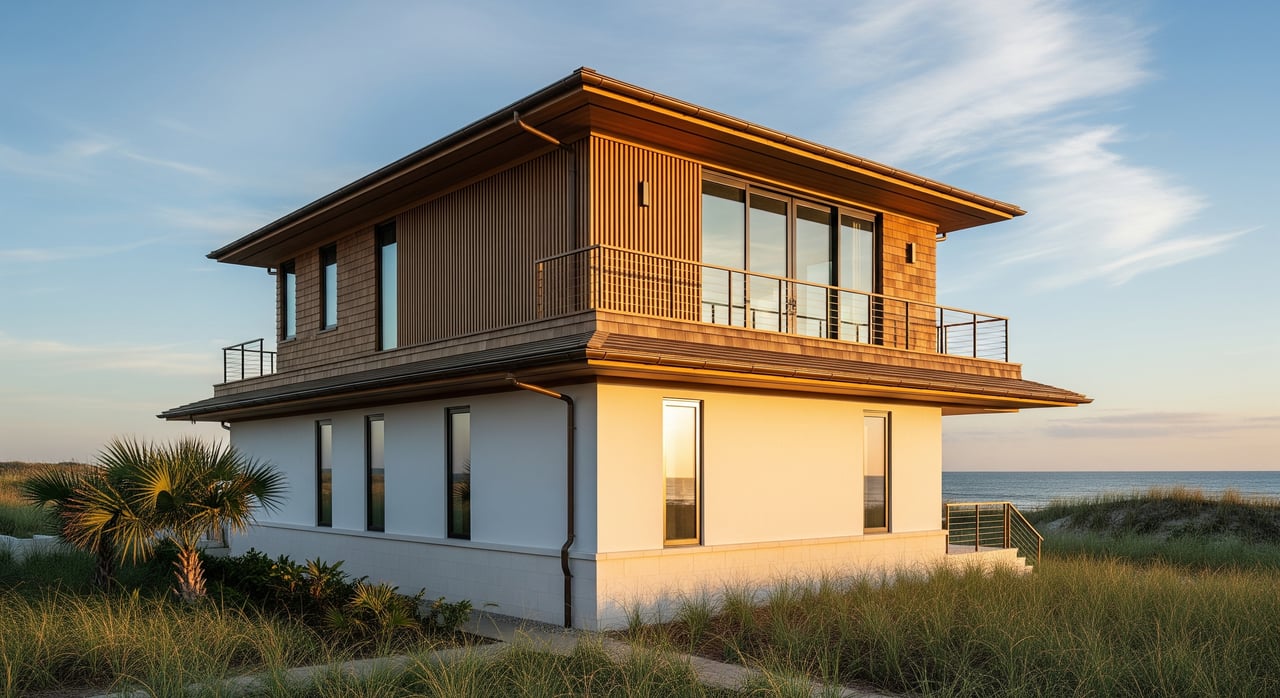
Thinking about buying or selling in Xanadu By The Sea and wondering if CBS or wood-frame is the smarter choice? You are not alone. In a coastal setting, construction type affects durability, maintenance, insurance, and even resale. This guide breaks down the tradeoffs in clear terms and gives you practical checklists so you can move forward with confidence. Let’s dive in.
What CBS and wood-frame mean
CBS refers to concrete masonry or concrete block walls with reinforced concrete elements, often finished with stucco or another exterior veneer. Many coastal condos and multifamily buildings use concrete or masonry because of wind and fire performance.
Wood-frame uses lumber or engineered wood studs, plates, and joists. Exterior finishes can be siding, stucco over sheathing, brick veneer, or fiber cement. Many single-family coastal homes use wood framing for cost and speed, while others use CBS where codes and insurers prefer masonry.
How each performs near the coast
Wind and impact
- CBS: High mass and continuous walls help resist uplift and lateral loads during strong winds. Masonry often retains structural capacity after severe events.
- Wood-frame: With modern hurricane straps and continuous load paths, wood can perform well, but historically it has been more vulnerable to roof covering loss and secondary water damage.
Water and moisture
- Wood-frame: Susceptible to moisture intrusion that can lead to rot and mold, especially at sill plates and deck connections if detailing is weak.
- CBS: Less biological decay risk, yet joints, penetrations, stucco systems, and balconies can still admit water. Trapped moisture behind cladding can create interior issues if drainage is missing.
Salt-air corrosion
- CBS: Embedded steel can corrode if concrete cover is thin or cracks let in saltwater, leading to spalling and deterioration.
- Wood-frame: Connectors and fasteners may corrode in salt air. Coastal-rated stainless or hot-dip galvanized components are recommended.
Termites and pests
- Wood-frame: Higher risk for termite or wood-destroying organism damage. Preventive inspections are essential.
- CBS: Low direct termite risk in mass walls, but wood elements like roof framing and interiors still need protection.
Energy and comfort
- CBS: Thermal mass can smooth indoor temperatures. To meet modern efficiency, you usually need continuous or cavity insulation.
- Wood-frame: Cavity insulation is straightforward, and you can reach strong R-values when details are airtight and continuous.
Fire and sound
- CBS: Strong inherent fire resistance and often better sound isolation because of its density, a plus in multifamily or vacation settings.
- Wood-frame: Fire resistance depends on assemblies and finishes, and typical walls offer lower sound isolation than masonry.
Cost, insurance, and resale
Construction and lifecycle costs
- Initial cost: Wood-frame is typically less expensive to build. CBS costs more for labor and materials.
- Long-term: CBS can reduce structural storm damage, yet concrete repairs for corrosion and spalling can be costly. Wood often needs more frequent localized repairs for rot, termites, or siding.
Insurance considerations
- Wind and hurricane coverage: In many coastal markets, insurers may favor masonry or CBS because of performance. Actual pricing depends on the home’s condition and mitigation features.
- Flood coverage: Determined by elevation and flood risk, not the wall material. Water still damages interiors, HVAC, and electrical systems regardless of construction type.
- Mitigation credits: Impact-rated windows and doors, shutters, roof attachment details, and continuous load paths matter for both CBS and wood.
Financing and appraisal
Lenders and appraisers consider construction type, condition, and local risk. In some coastal markets, CBS can help demonstrate reduced wind risk, but maintenance and documented upgrades are major drivers of value and underwriting.
Resale preferences
Buyer perceptions vary. Many coastal buyers prefer CBS for hurricane resilience and durability, while others prioritize price, design, or renovations. In condo settings, the building’s overall condition and HOA management often outweigh material type.
What to inspect before you buy
Documents to request
- Building permits and sign-offs for major work, including roof, balconies, and structural repairs.
- Flood zone designation and, if applicable, an elevation certificate.
- HOA or condo reserve study, meeting minutes, budgets, and disclosures of past or planned structural work.
- Insurance loss history and any claims related to wind or flood.
- Warranties for impact-rated openings and recent roof or mitigation upgrades.
- Engineer reports or contractor invoices for structural or envelope repairs.
Specialist inspections
- General home inspection with a coastal-savvy professional.
- Structural engineer review if you see cracking, spalling, sagging balconies, or long-term water intrusion.
- Moisture or infrared scan to find hidden leaks behind stucco or cladding.
- Stucco or EIFS specialist to check for delamination, missing flashings, or drainage issues.
- Concrete inspection for spalling and rebar exposure in CBS structures.
- Termite or wood-destroying organism inspection for wood components.
- Roof certification with age, attachment method, and remaining life.
- Balcony and deck inspection for waterproofing membranes and attachments.
Red flags to address early
- Cracks in masonry with rust staining, spalled concrete, or exposed rebar.
- Soft or stressed finishes near perimeters, a sign of water intrusion.
- Repeated stucco patching or peeling paint around penetrations.
- Sagging or delaminating balconies and overhangs.
- Corroded connectors or fasteners on wood framing.
- Low HOA reserves or deferred envelope maintenance in condo buildings.
Smart upgrades and maintenance
For wood-frame homes
- Use stainless or hot-dip galvanized connectors and fasteners in salt air.
- Maintain a robust water management system, including flashing, sill pans, and drainage planes behind the cladding.
- Keep termite treatments or bait stations current, and schedule annual inspections.
- Elevate mechanicals where feasible to reduce flood vulnerability.
For CBS homes
- Seal cracks promptly, maintain protective coatings, and repair spalling early.
- Confirm adequate concrete cover over steel, and consider specialized protection in severe exposures.
- Monitor stucco integrity and ensure the wall system includes proper drainage and weep paths.
Universal storm upgrades
- Impact-rated windows and doors or code-approved shutters.
- Continuous load path with verified roof attachments and hurricane straps.
- A current wind mitigation report to support insurance savings.
- Routine inspections of balconies, decks, and waterproofing membranes.
If a storm hits: what to expect
- Wood-frame: The most common failure is loss of roof coverings or sheathing, which allows rapid interior water damage. Repairs often include drying, mold remediation, and replacing sheathing, roofing, and any compromised framing.
- CBS: Structural walls often remain, but failures can include window or door blowouts, balcony issues, stucco delamination, or corrosion repairs. Cosmetic fixes may be extensive, yet the primary structure often retains capacity.
CBS vs. wood-frame: quick decision guide
- You value hurricane resilience and fire resistance: CBS often gets the edge.
- You prioritize lower upfront cost and easier insulation: wood-frame may fit your budget.
- You want low pest risk: CBS reduces termite exposure, although wood elements still need protection.
- You plan to hold long term near salt air: CBS requires vigilant crack sealing and corrosion checks, wood needs strict moisture and pest control.
- You are buying into a condo or HOA: evaluate reserves, repair history, and envelope maintenance, not just the material.
Work with a local advisor
Every property in Xanadu By The Sea is unique. Your best decision will come from a blend of construction knowledge, document review, and targeted inspections. If you are weighing CBS vs. wood-frame for a purchase or preparing to sell, you will want a clear plan for inspections, insurance positioning, and market presentation. For personal guidance and a grounded strategy, reach out to Bradley Hurst for a quick consultation.
FAQs
Is CBS always better near the ocean?
- Not always, CBS often performs better in wind and resists rot, but the home’s condition, maintenance history, elevation, and any HOA building management are decisive.
Does construction type change flood risk in Xanadu By The Sea?
- Flood risk is driven by elevation and flood zone, not wall material, and water can still damage interiors, HVAC, and electrical systems in both CBS and wood homes.
Can a wood-frame home be upgraded to perform like CBS?
- You can improve performance with modern connectors, impact-rated openings, continuous water management, and pest control, but material differences still remain.
What inspections matter most for coastal homes?
- For wood, prioritize termite and roof certification plus a moisture scan; for CBS, focus on concrete, stucco or EIFS reviews, and a moisture scan for hidden leaks.
How does construction type affect insurance costs?
- In many coastal markets, insurers may favor CBS for wind coverage, while flood premiums depend on elevation; mitigation features influence pricing for both types.